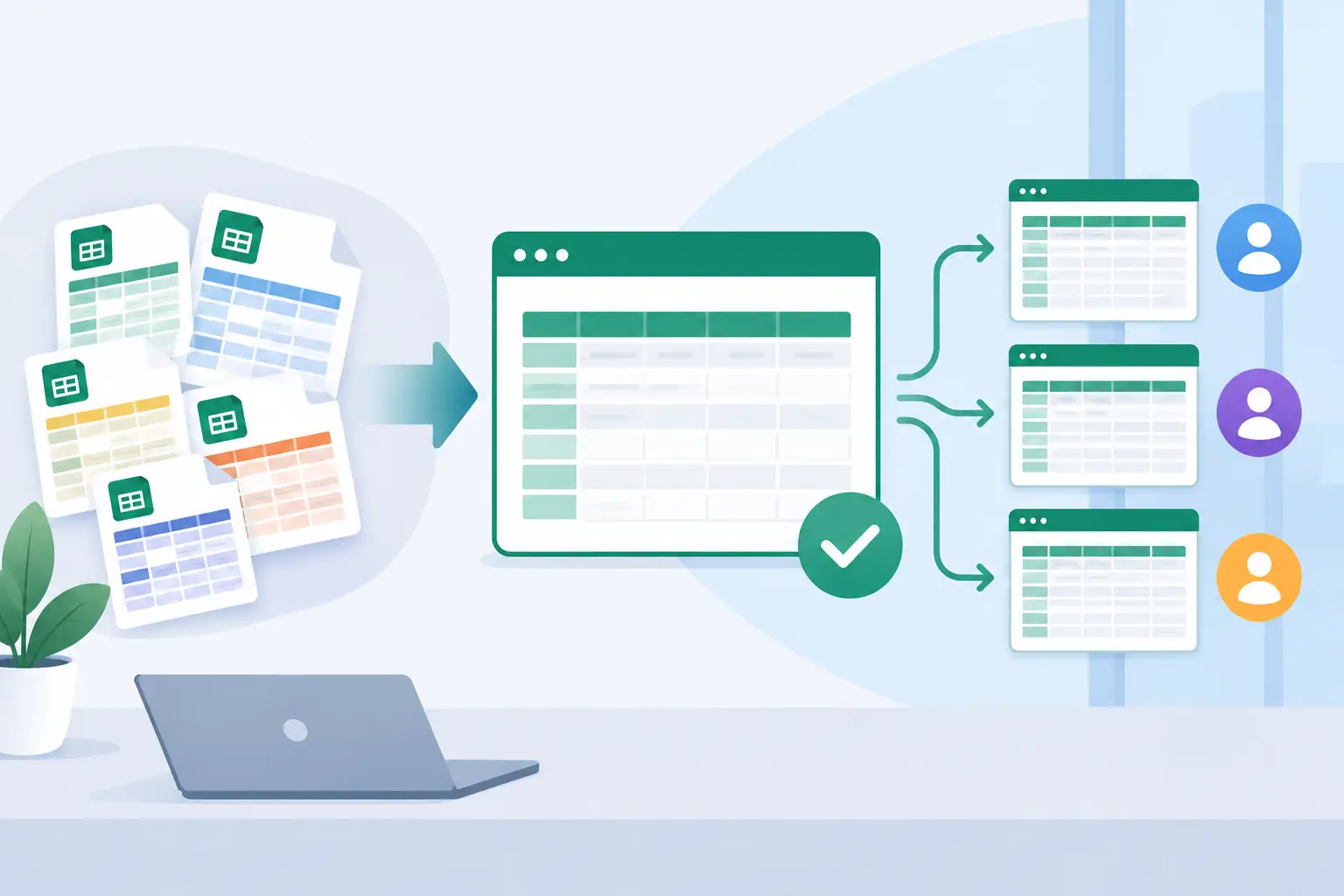
A beam check copied from an old workbook can look familiar and still be wrong. A hidden cell reference, an overwritten material grade, or a conversion entered once in the wrong units can travel quietly from project to project. A calculation template rollout is the point at which those local habits become a controlled engineering workflow - or become a wider source of repeatable error.
For engineering teams, the aim is not simply to distribute standard files. It is to establish reusable calculation documents that make inputs, assumptions, formulae, units and outputs clear to the person preparing the check and to the person reviewing it. That requires technical ownership, a deliberate pilot, and a practical way to control changes after release.
What a calculation template rollout needs to achieve
A useful template does more than save typing. It captures an accepted calculation method in a form that can be applied consistently while still exposing project-specific judgement. For example, a steel beam deflection worksheet may standardise loading conventions, support conditions and serviceability limits, but it must make the selected section, span, load cases and restraint assumptions visible and editable.
That distinction matters. If a template hides engineering decisions behind fixed values, it encourages false confidence. If it contains too few controls, every engineer rebuilds the method in a different way. The best templates standardise the repeatable mechanics and leave accountable choices explicit.
A rollout should therefore improve four things at once: calculation quality, review speed, document consistency and reuse. Those outcomes are connected. A reviewer can assess a calculation faster when units, equations and assumptions sit beside the result. Future users are less likely to alter a method accidentally when the worksheet explains why each input is needed.
Start with a template inventory, not a file migration
Teams often begin by collecting every spreadsheet in a shared drive. That produces volume, not a reliable starting point. A better approach is to identify the calculations that are frequent, technically stable and costly to recreate. Common candidates include bolt group checks, beam bending and deflection, retaining wall stability, pipe sizing, pressure vessel checks and simple foundation sizing.
For each candidate, record its discipline owner, intended use, governing standard or internal method, expected inputs, outputs, known limitations and current review status. This quickly separates a tested calculation method from a useful but unverified personal workbook.
Templates should be prioritised by risk and repetition. A calculation used weekly across several projects may justify early effort even if it is relatively simple. A highly specialised analysis used once every two years may be better handled as a project-specific worksheet. Standardising everything creates a library that no one can navigate or maintain.
Define the technical boundary
Every template needs a short scope statement near the top of the document. State what it checks, which code basis it follows, which unit systems it supports, and where it must not be used. A bearing pressure check, for instance, may calculate serviceability pressures but not assess settlement or global stability.
This is also where assumptions belong. Do not bury them in a guidance note or rely on the preparer to remember them. If a formula assumes linear elastic behaviour, uniform loading or a particular connection arrangement, show it next to the calculation. Visible constraints are part of the design check.
Build readable calculation templates
A calculation template should read in the same direction as an engineering argument: define the problem, identify inputs and assumptions, perform the method, then interpret the result. Raw cell grids make that sequence difficult to follow, particularly once copied, extended and edited by multiple people.
Use meaningful variable names and display units with every key value. Unit-aware mathematics reduces the chance that a force in kN is combined with an area in mm² without an intentional conversion. It also makes the worksheet easier to inspect because the dimensions of the result provide a basic check on the equation.
Where an equation is non-obvious, add a brief explanatory note rather than expecting a reviewer to reverse-engineer it. The note does not need to reproduce a textbook derivation. It should explain the engineering purpose of the step and identify the source method where applicable.
Plots, sketches and images have a place when geometry or load direction affects the result. A small connection sketch can prevent more misunderstanding than an extra paragraph of instructions. The same is true for a plotted interaction curve or a deflected-shape diagram. Use visuals to clarify interpretation, not to decorate the page.
Calculeaf supports this document-led approach by combining unit-aware formulae, notes, plots and printable calculation pages in one worksheet. The practical benefit is that the reusable template remains a reviewable technical document rather than a collection of cells whose logic is only apparent to its original author.
Pilot the rollout with real project work
Do not validate a template solely against hand-picked inputs. A pilot should use live or recently completed project cases that include the awkward conditions engineers actually encounter: mixed units from supplier data, incomplete geometry, load combinations, unusual boundary conditions and values near governing limits.
Select a small group of engineers from the discipline that will use the template most. Give them a defined calculation to complete, then compare the result and document quality with the existing process. Observe where they hesitate. Confusion around an input label, a unit choice or a pass/fail criterion is useful evidence that the template needs work.
Independent checking remains essential during the pilot. Compare outputs with a verified previous calculation, a hand check or a separate analysis method as appropriate. Agreement alone is not enough if both calculations share the same incorrect assumption. The reviewer should inspect the method, inputs and applicability as well as the final number.
Test the failure cases deliberately
A template should fail clearly when used outside its limits. Enter a zero span where the method requires a positive length. Try inconsistent units. Use a geometry that exceeds the simplified model's stated range. The worksheet should either prevent the calculation, flag the issue or make the invalid condition obvious.
Useful validation checks include input range warnings, unit consistency checks, clear status outputs and conditional messages that explain what requires attention. Avoid vague red or green indicators without context. A reviewer needs to know whether a result fails because of capacity, applicability, missing data or an incomplete check.
Control versions without slowing engineers down
Once a template is in use, uncontrolled copies are the main threat. Engineers need the freedom to create project-specific calculation documents, but they should not unknowingly start from an obsolete method.
Keep a controlled source template with a clear identifier, revision number, release date and technical owner. A short change record should state what changed and whether previous calculations need reassessment. A correction to a display label is not equivalent to a correction in a resistance equation, and the release process should reflect that difference.
The working copy should retain a visible reference to the source template revision. This gives reviewers enough traceability to understand which method was used without forcing every project calculation into a central editing queue. It is a balance: strict control over the master method, practical flexibility in project application.
Review permissions deserve the same care. Not every experienced user needs authority to alter the controlled template. Assign ownership to people who can assess technical changes, maintain the code basis and coordinate feedback from users. For smaller practices, that may be a single discipline lead supported by an independent checker.
Make adoption part of the engineering workflow
A release announcement is rarely sufficient. Engineers adopt templates when they reduce effort on the next real task and when reviewers recognise them as an accepted format. Show a short worked example using a familiar check, such as bolt stiffness or a simply supported beam under distributed load. Focus on where to enter data, how units behave, how assumptions are recorded and what the final document should show.
Avoid lengthy generic training. A ten-minute demonstration tied to a current design task is more likely to be remembered. Follow it with concise guidance on selection: which template to use, when not to use it, and who to contact when the method needs extending.
Feedback should be captured, but filtered. Requests for clearer labels or an additional material option may be worthwhile. Requests that turn a focused calculation into a broad analysis package may signal that a separate template is needed. A template that tries to handle every scenario becomes harder to review and easier to misuse.
Measure adoption through useful evidence rather than downloads alone. Look at how often controlled templates are used in issued calculations, how long reviews take, how many corrections arise from unit handling or missing assumptions, and whether engineers are still rebuilding common checks from scratch. These indicators reveal whether the rollout is improving engineering work rather than merely changing software.
A well-managed template library should make the right calculation method easier to choose than an old spreadsheet. Keep each template bounded, readable and technically owned, and engineers can spend more of their attention on the decisions that genuinely require judgement.