Battery Bank Capacity for Backup Power
Battery Bank Capacity for Backup Power
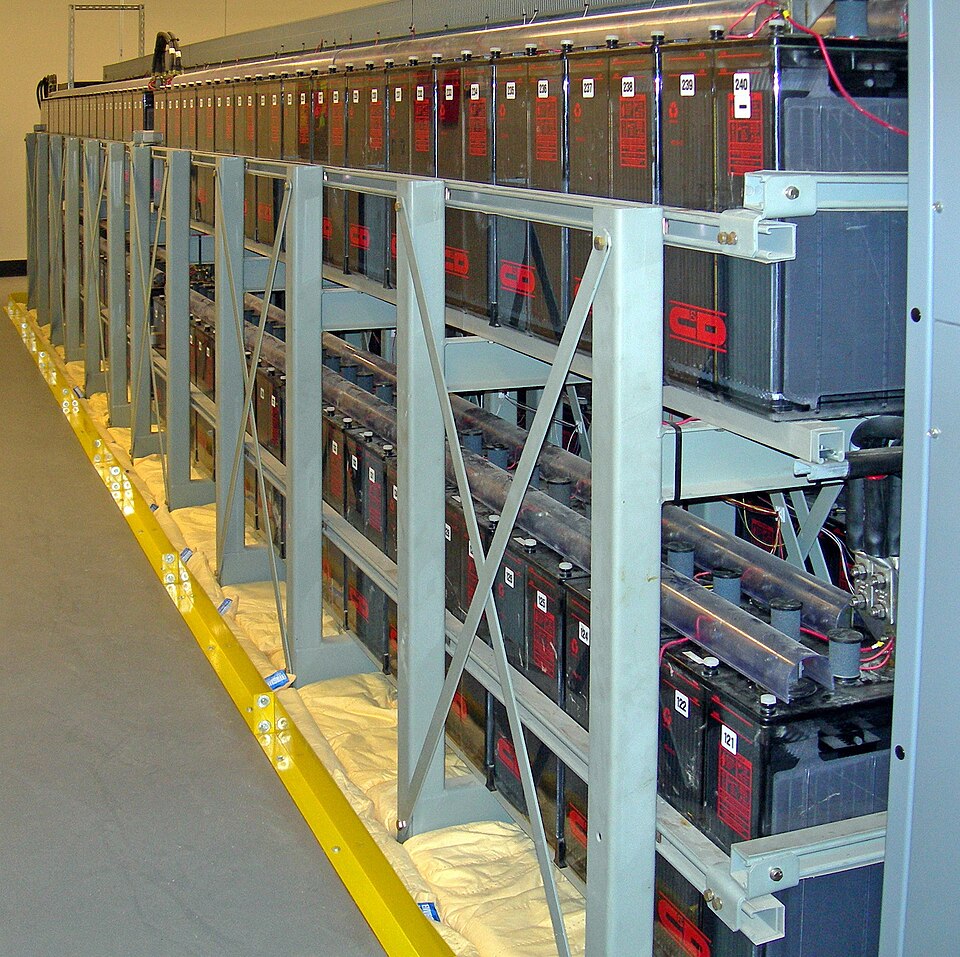
Sizing a battery backup system requires converting a load’s power demand and required runtime into a battery capacity rated in amp-hours at the system’s DC bus voltage, while accounting for the inverter’s conversion losses along the way.Undersizing the battery bank leaves critical loads without power before the outage or runtime target is met, while oversizing wastes money on batteries that rarely get used to their full depth — so this capacity figure is the central number in any backup power system design.
The required capacity is Ah = (P·t)/(V·η), the load power times the runtime, divided by the battery voltage and inverter efficiency. where P is the backup load power, t is the required backup duration, V is the battery bank voltage, and η is the inverter efficiency.
Inputs
P_bak := 500 W=500 W
t_bak := 4 hr=14400 s
V_bat := 24 V=24 V
eta_inv := 0.9=0.9
The total energy the load consumes over the backup period is divided by the battery voltage and derated for inverter losses to find the amp-hour capacity the battery bank must actually supply.
Ah_cap := (P_bak·t_bak)/(V_bat·eta_inv)=333333.33 C
Results
This works out to roughly 93 amp-hours at 24 V to run a 500 W load for 4 hours through a 90%-efficient inverter. Because batteries should not be routinely discharged to 100% depth for longevity, the selected bank’s rated capacity should be sized somewhat larger than this raw figure, often by dividing by a maximum allowable depth-of-discharge fraction.
Assumptions & limitations
- Constant load power for the entire backup duration.
- Inverter efficiency assumed constant across the load range.
- Battery depth-of-discharge and aging derating not applied to this raw capacity figure.