Motor Locked-Rotor Starting Current
Motor Locked-Rotor Starting Current
When an induction motor is switched on, it initially behaves almost like a short-circuited transformer, drawing a large inrush (locked-rotor) current — typically several times the motor’s full-load running current — until it accelerates up to speed and its back-EMF limits the current draw.This starting current spike must be accounted for when sizing upstream breakers, conductors, and voltage-drop studies, since a protective device or conductor sized only for full-load running current would trip or overheat every time the motor starts.
The locked-rotor starting current is I_start = I_fl·k_LRA, the full-load current times the locked-rotor current multiplier. where I_fl is the motor’s rated full-load current and k_LRA is the locked-rotor current multiplier from the motor nameplate.
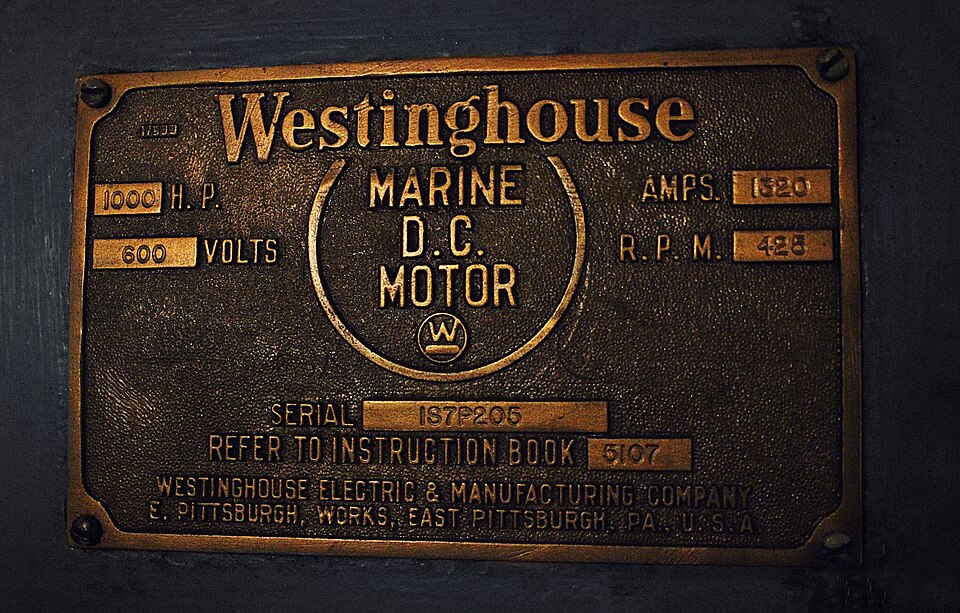
Inputs
I_fl := 25 A=25 A
k_lra := 6.5=6.5
Scaling the full-load current by the nameplate locked-rotor multiplier gives the instantaneous inrush current drawn the moment the motor is energized.
I_start := I_fl·k_lra=162.5 A
Results
A starting current of about 163 A against a 25 A full-load rating — roughly 6.5 times — is a typical inrush ratio for a standard induction motor. Breakers and starters must be rated (or use time-delay/motor-rated devices) to tolerate this current for the brief starting interval without tripping, while still protecting the circuit against a true sustained overload.
Assumptions & limitations
- Direct-on-line starting assumed; soft starters or VFDs reduce this current.
- Locked-rotor multiplier taken from the motor nameplate/NEMA code letter.
- Starting current duration (typically a few seconds) not modeled, only its magnitude.