Transformer Per-Unit Impedance Voltage Drop
Transformer Per-Unit Impedance Voltage Drop
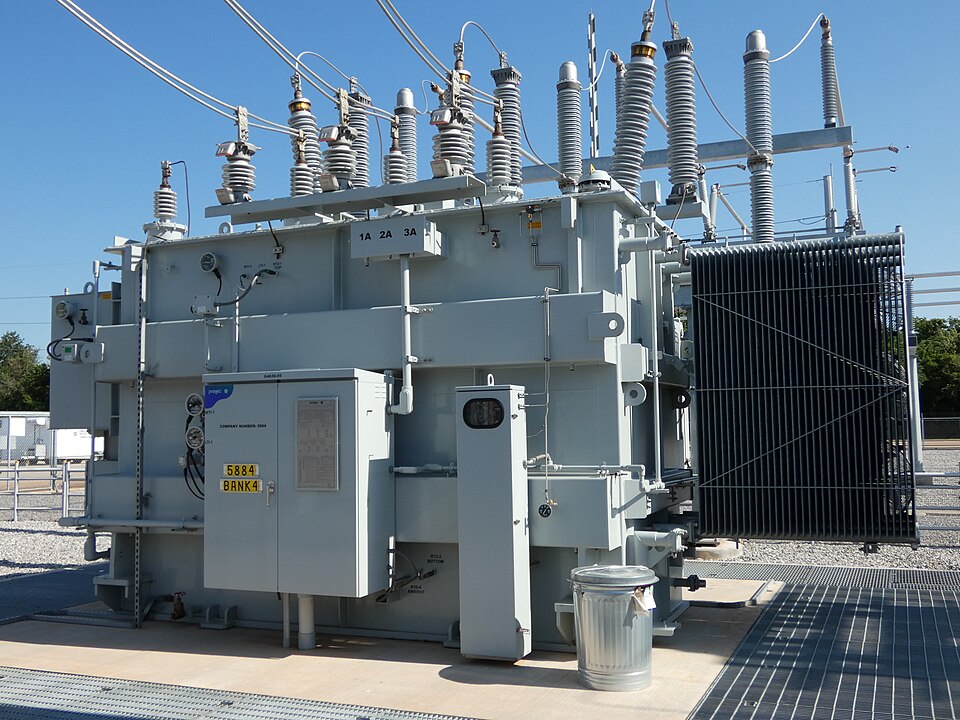
Transformer nameplates specify impedance as a percentage (the per-unit impedance), which conveniently also approximates the voltage drop across the transformer at rated load. Working in per-unit values lets engineers estimate voltage regulation without needing the transformer’s actual ohmic impedance or turns ratio.This quick per-unit estimate is what utility and facility engineers use to check whether a transformer’s secondary voltage will sag too far under load — a transformer with high impedance and light loading might seem fine, but the same unit fully loaded can create a voltage drop that trips downstream undervoltage protection.
The per-unit voltage drop is Vd_pu = Z_pu·I_pu, the per-unit impedance times the per-unit loading fraction. where Z_pu is the transformer’s per-unit (nameplate) impedance and I_pu is the loading expressed as a fraction of rated current.
Inputs
Z_pu := 0.05=0.05
I_pu := 0.9=0.9
Multiplying the nameplate per-unit impedance by the actual loading fraction scales the full-load voltage drop down to the drop expected at this specific loading.
Vd_pu := Z_pu·I_pu=0.05
Results
A per-unit drop of 0.045 (4.5%) at 90% loading is a normal result for a typical 5%-impedance distribution transformer, and is generally within acceptable voltage regulation limits. As loading approaches 100%, this drop approaches the full nameplate impedance percentage, so a transformer running consistently near full load should be checked against the downstream equipment’s minimum voltage tolerance.
Assumptions & limitations
- Linear approximation; actual voltage drop also depends on load power factor.
- Per-unit impedance taken directly from the transformer nameplate.
- Resistive and reactive components of impedance not separated.