Angular Frequency and Period of a Torsional Pendulum
Angular Frequency and Period of a Torsional Pendulum
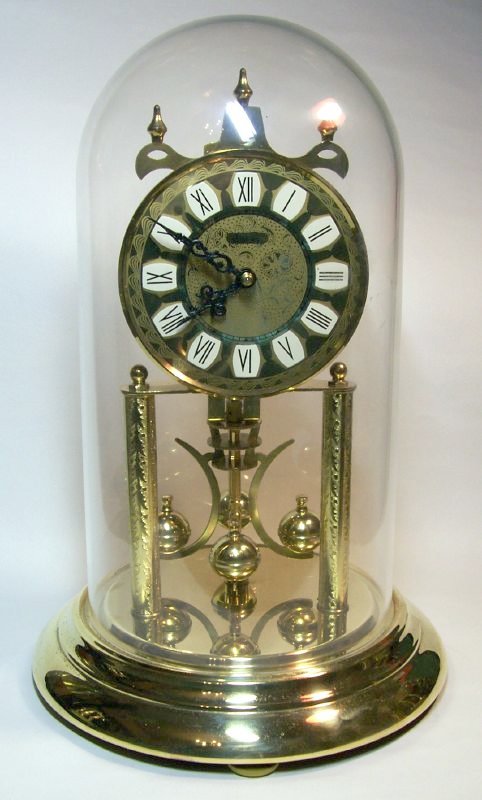
A torsional pendulum oscillates by twisting back and forth about an axis, restored by a torsional spring (a wire, a coil spring, or a shaft) rather than gravity — the rotational analog of a mass on a linear spring. This same physics underlies mechanical balance-wheel clocks, torsion balances used to measure very small forces, and vibration analysis of shafts and couplings.Knowing the natural oscillation period matters whenever a torsional system might be driven near that frequency — a rotating shaft with periodic torque pulses (like an engine crankshaft) can resonate destructively if its operating speed gets too close to this natural torsional frequency.
The natural angular frequency is ω = sqrt(k/I) and the oscillation period is T = 2π/ω. where k_tors is the torsional spring stiffness, I_tors is the moment of inertia of the oscillating body, omega_tors is the resulting natural angular frequency, and T_period is the oscillation period.
Inputs
k_tors := 0.5 N·m=0.5 Nm
I_tors := 0.02 kg·m^2=0.02 kg·m^2
Take the square root of stiffness over moment of inertia — exactly analogous to sqrt(k/m) for a linear mass-spring system — to get the natural angular frequency.
omega_tors := sqrt(k_tors/I_tors)=5 Hz
Convert angular frequency into a period: one full oscillation takes 2π radians of phase to complete.
T_period := 2·pi/omega_tors=1.26 s
Results
With this stiffness and moment of inertia, the pendulum oscillates several times per second, completing one full twist-and-return cycle in a fraction of a second. A stiffer torsional spring (larger k) raises the natural frequency and shortens the period, while a larger moment of inertia does the opposite — exactly the design trade-off used to tune a torsional system away from a problematic driving frequency.
Assumptions & limitations
- Linear torsional spring (restoring torque proportional to twist angle).
- No damping (undamped natural frequency).
- Small-angle oscillation about equilibrium.