Brinell Hardness to Tensile Strength Conversion
Brinell Hardness to Tensile Strength Conversion
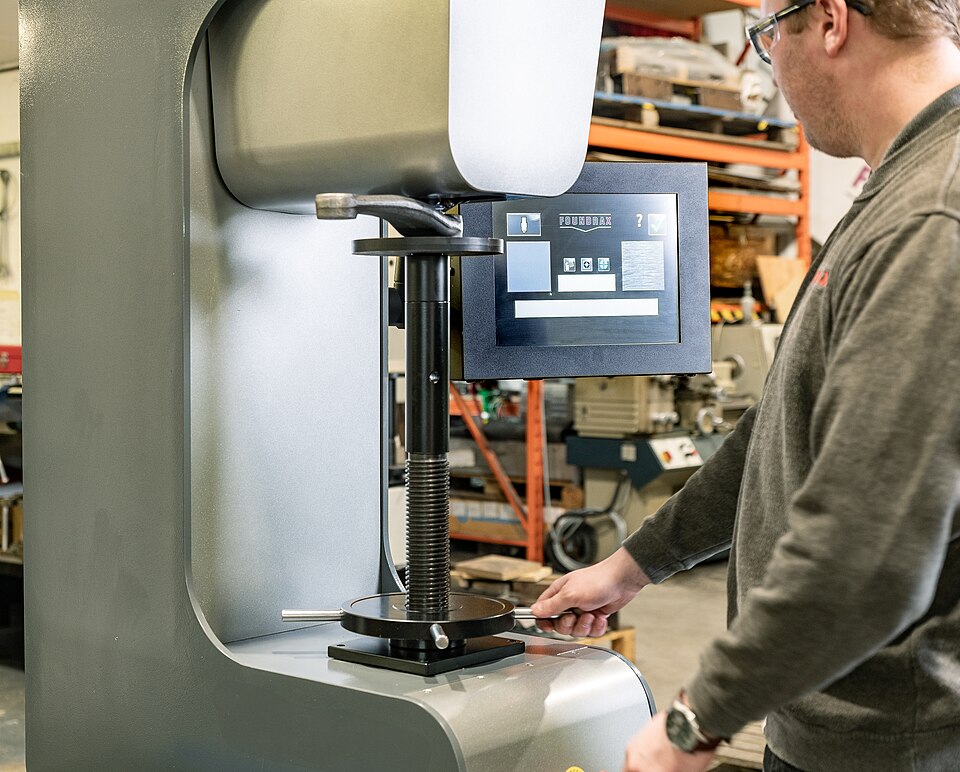
Hardness testing is fast, cheap, and often non-destructive (or nearly so) compared to a full tensile test, which is why hardness measurements are routinely used on the shop floor to spot-check material strength on incoming stock or in-service components without cutting a tensile specimen. The empirical proportionality between Brinell hardness and tensile strength holds well for many carbon and low-alloy steels but is material-family specific — applying the same 3.45 factor to a different alloy system (aluminum, stainless, cast iron) without checking the applicable correlation can give a misleading strength estimate.
Ultimate tensile strength is estimated from Brinell hardness as Su = 3.45*HB (in MPa). where HB_num is the measured Brinell hardness number, a plain (unitless) number by convention.
Inputs
HB_num := 200=200
The Brinell number itself carries no physical units, so the empirical 3.45 MPa/HB coefficient is what attaches a stress unit to the correlation and gives the estimated tensile strength directly.
S_u := HB_num·(3.45 MPa)=690 MPa
Results
A hardness of 200 HB predicts a tensile strength around 690 MPa, consistent with a medium-carbon or low-alloy steel in a normalized or moderately hardened condition. This estimate is convenient for quick screening or acceptance testing, but a genuine engineering strength verification (or a certified mill test report) should still back up any safety-critical design decision rather than relying on the hardness correlation alone.
Assumptions & limitations
- Empirical correlation validated primarily for carbon and low-alloy steels.
- Not valid without adjustment for other alloy families (aluminum, stainless, cast iron, etc.).
- Assumes a properly calibrated Brinell test (correct load/ball size for the material).
- Gives an estimate, not a substitute for an actual tensile test where certification is required.